A video call is a bad way to spend an evening together.
It is fine for talking. But couples who live in the same city don't spend their evenings talking at each other across a table. They cook, watch something, play a game, or sit in the same room doing nothing much. The talking happens around the thing they are doing.
Long-distance couples don't get that. They get a call. And after the first twenty minutes of "how was your day," a call runs out of things to be.
So people patch an evening together. A Google Meet tab for the faces. Another tab for a chess site. A shared playlist. A movie started on a count of three. It works, badly. Half the night goes into setup, and none of those tools were made for two people who miss each other.
That is why I built moonbomb.me. It is one link that opens a room for two.
People enjoyed it. At its peak, more than 50 people were active on Moonbomb, and they spent around two hours a day in their rooms.
Two hours a day is a strange number for a side project. Most apps fight for two minutes. But it makes sense once you see what the room replaced. It wasn't competing with other apps. It was standing in for an evening together.
I launched it on Valentine's Day, back in February. The launch post opened with "this one is for you and your babe," which is still the most honest description of it.
The timing was luck. A few weeks earlier I had been selected for Anthropic's Built with Opus 4.6 hackathon, one of 500 people accepted out of more than 13,000 who applied. It came with $500 of API credits that expired on February 25. So I had a deadline, a budget that was not mine, and a date on the calendar that suited the idea. I built Moonbomb on those credits.
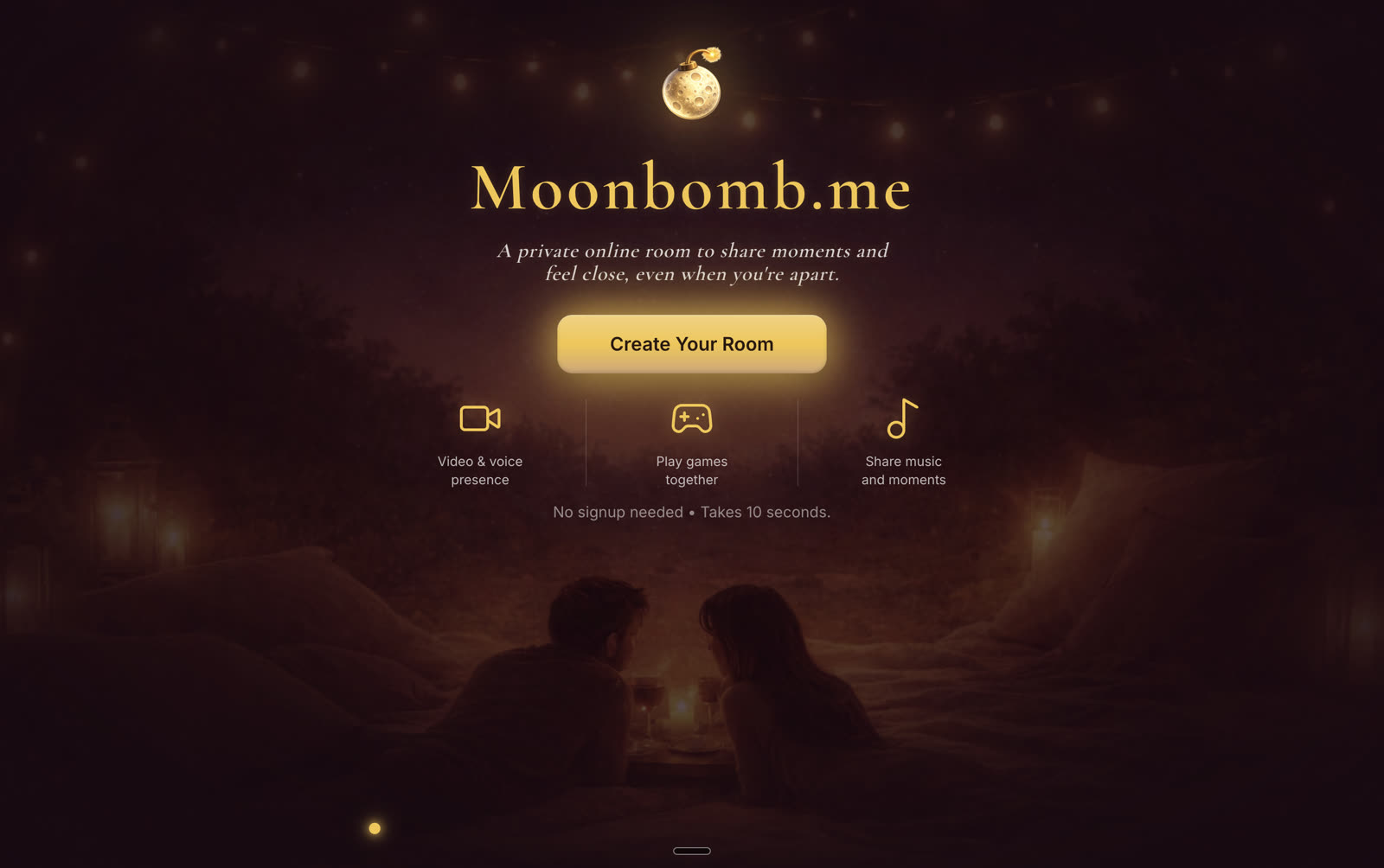
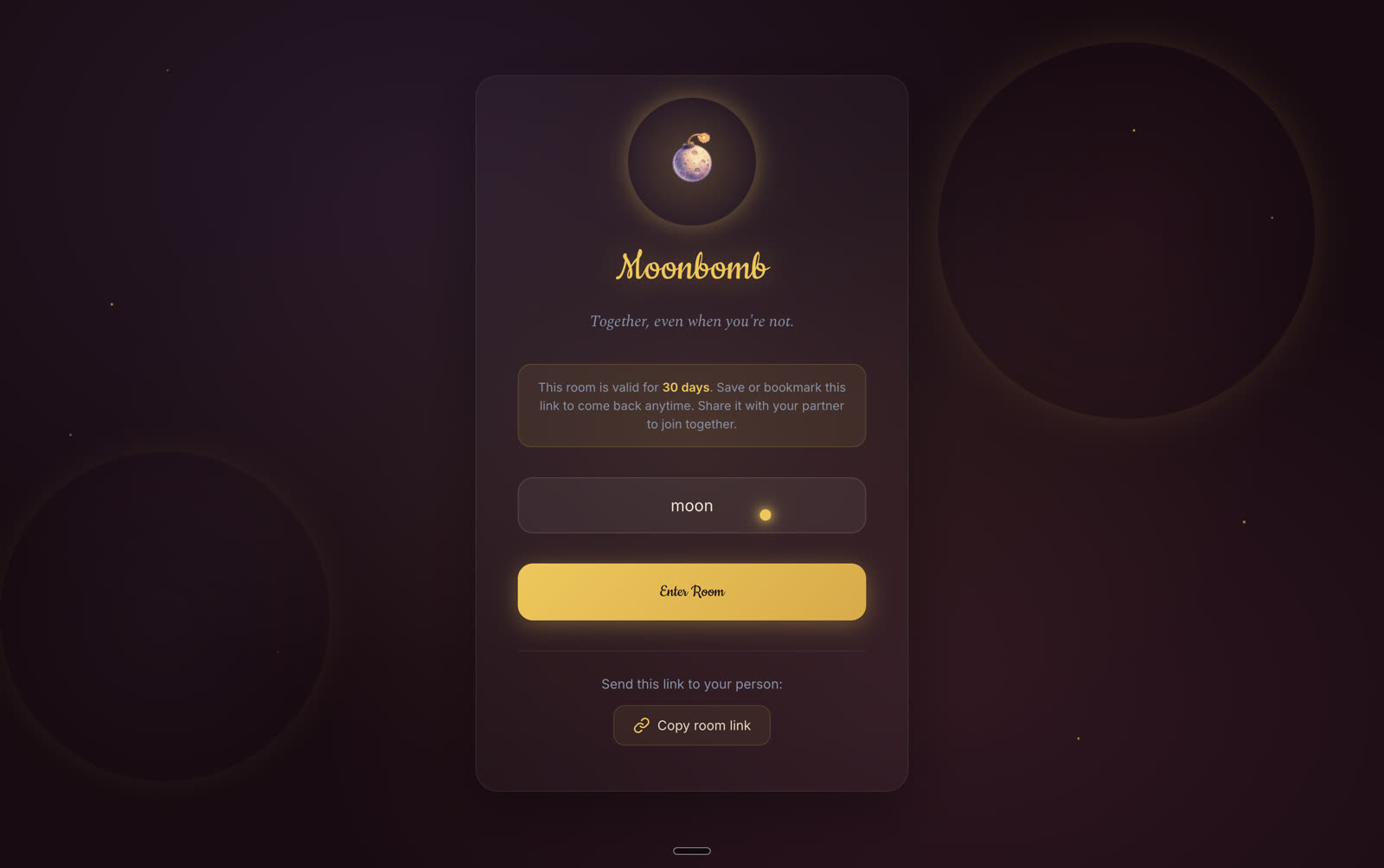
You press the button, name the room, and send the link to your person. The room stays yours for 30 days, so you can bookmark it and come back every night.
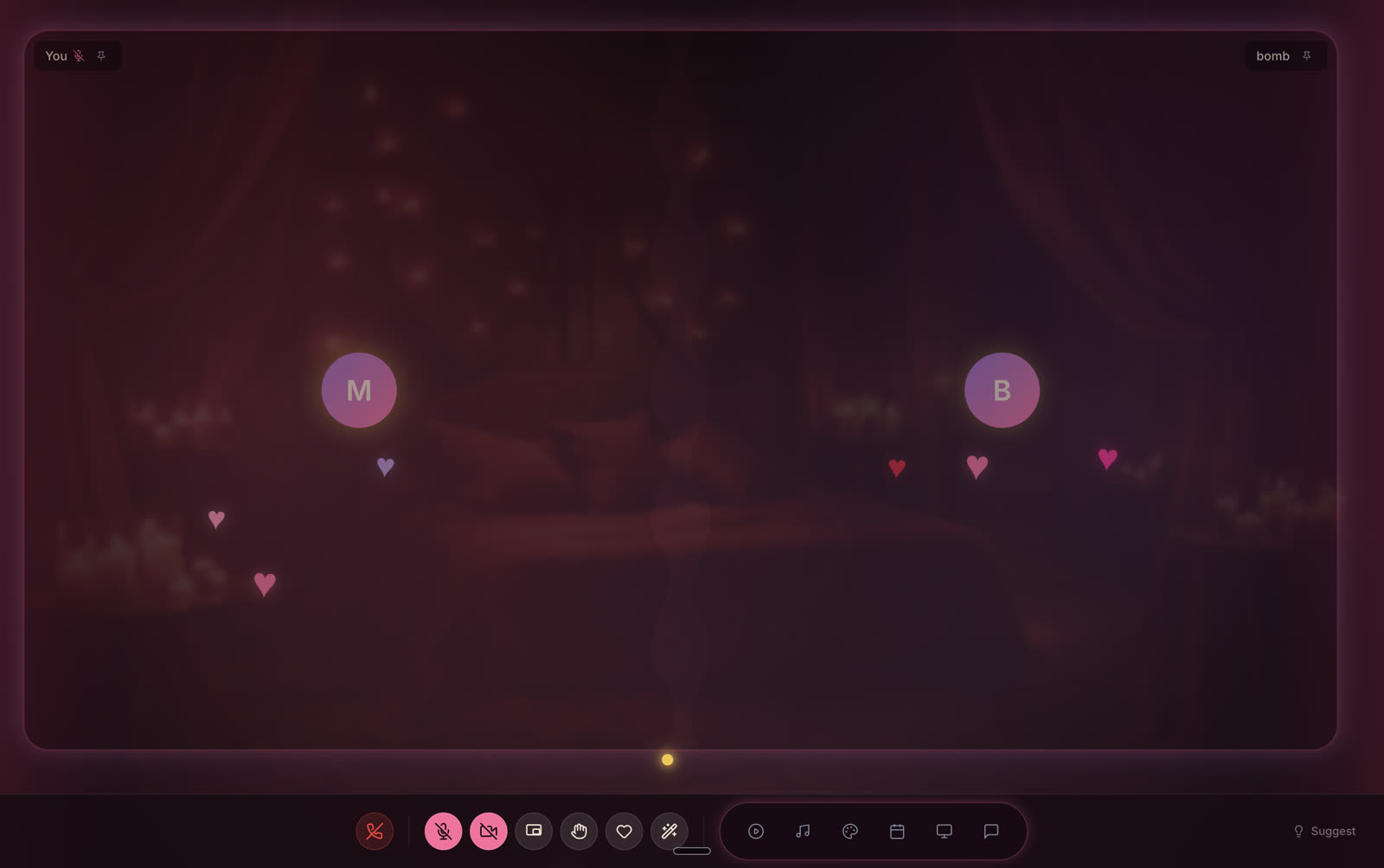
Inside, the video is only the background. The point is the bar at the bottom.
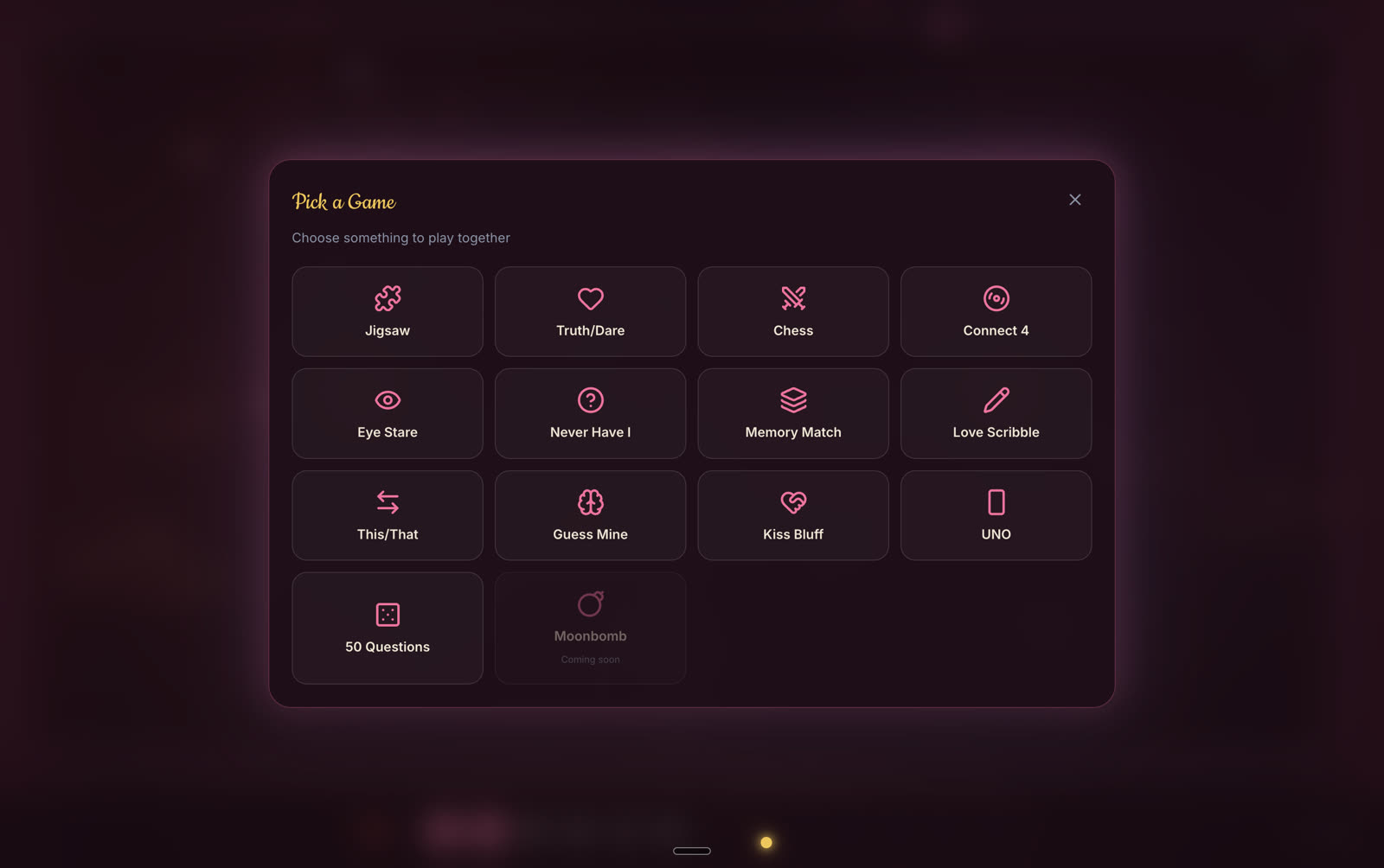
There are 13 games made for two. Chess, UNO, Connect 4, jigsaw and memory match are there. So are the ones that are more about each other than about winning, like Truth or Dare, Never Have I, and 50 Questions. When you open a game it takes the stage, and your faces move to the side.
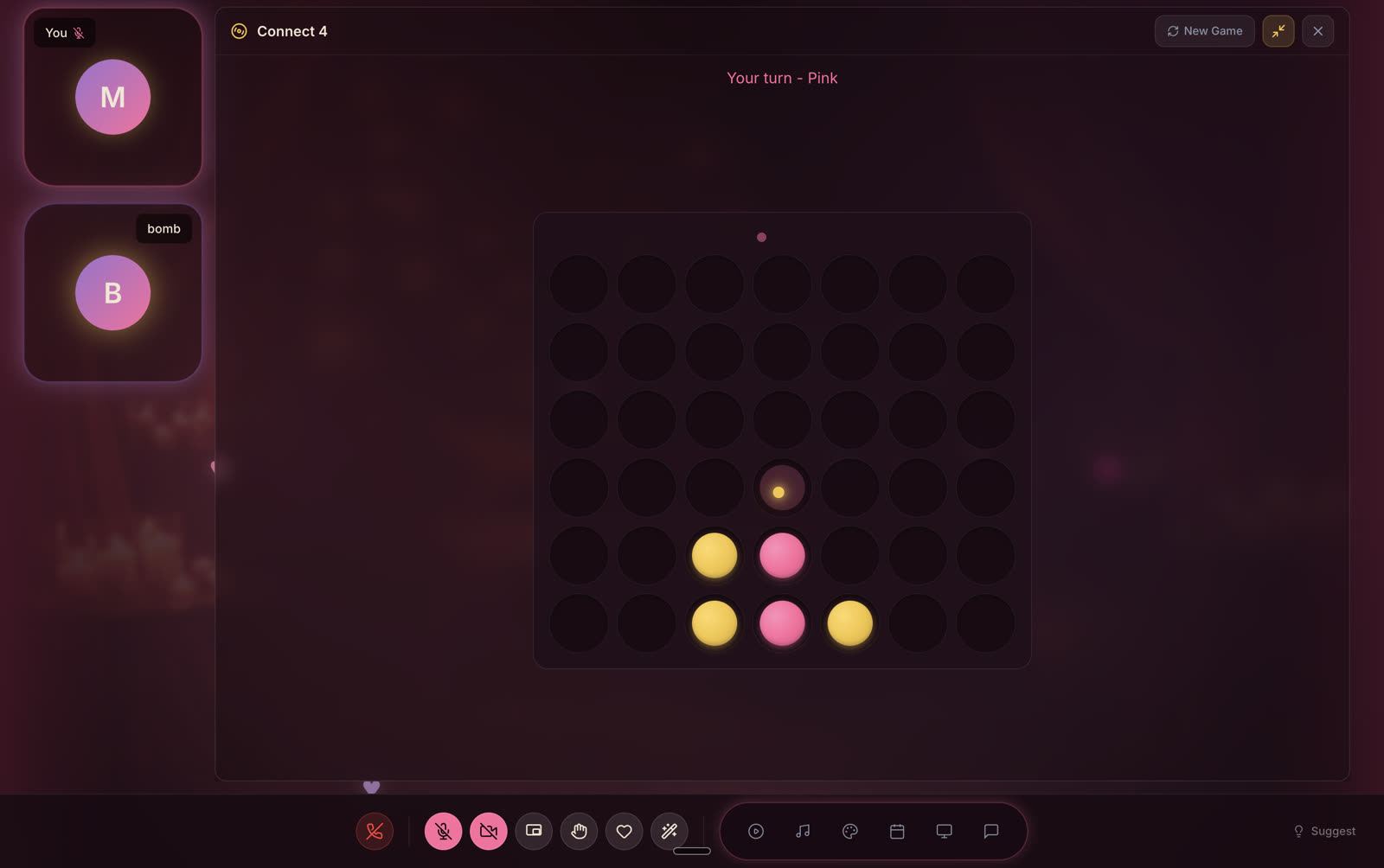
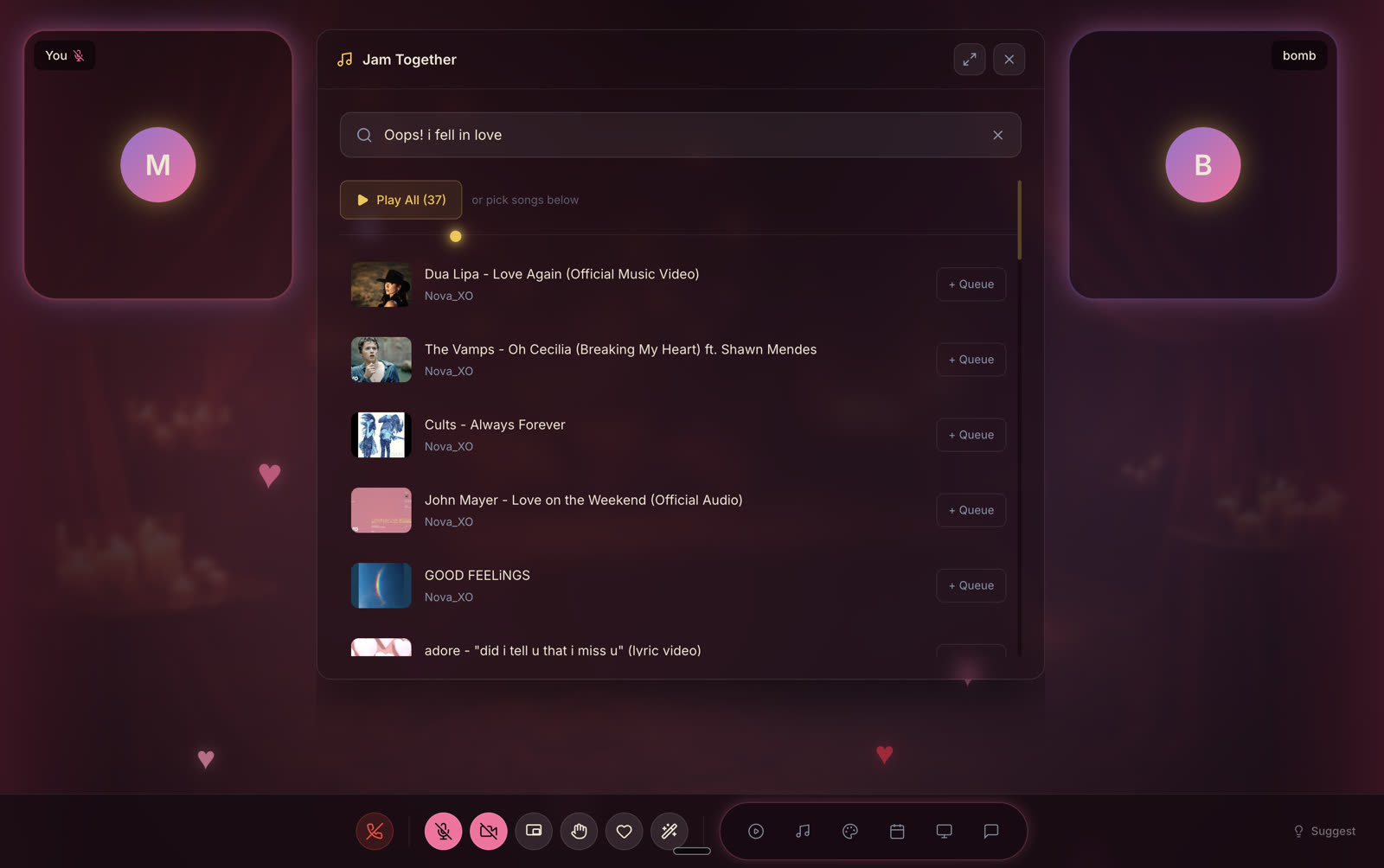
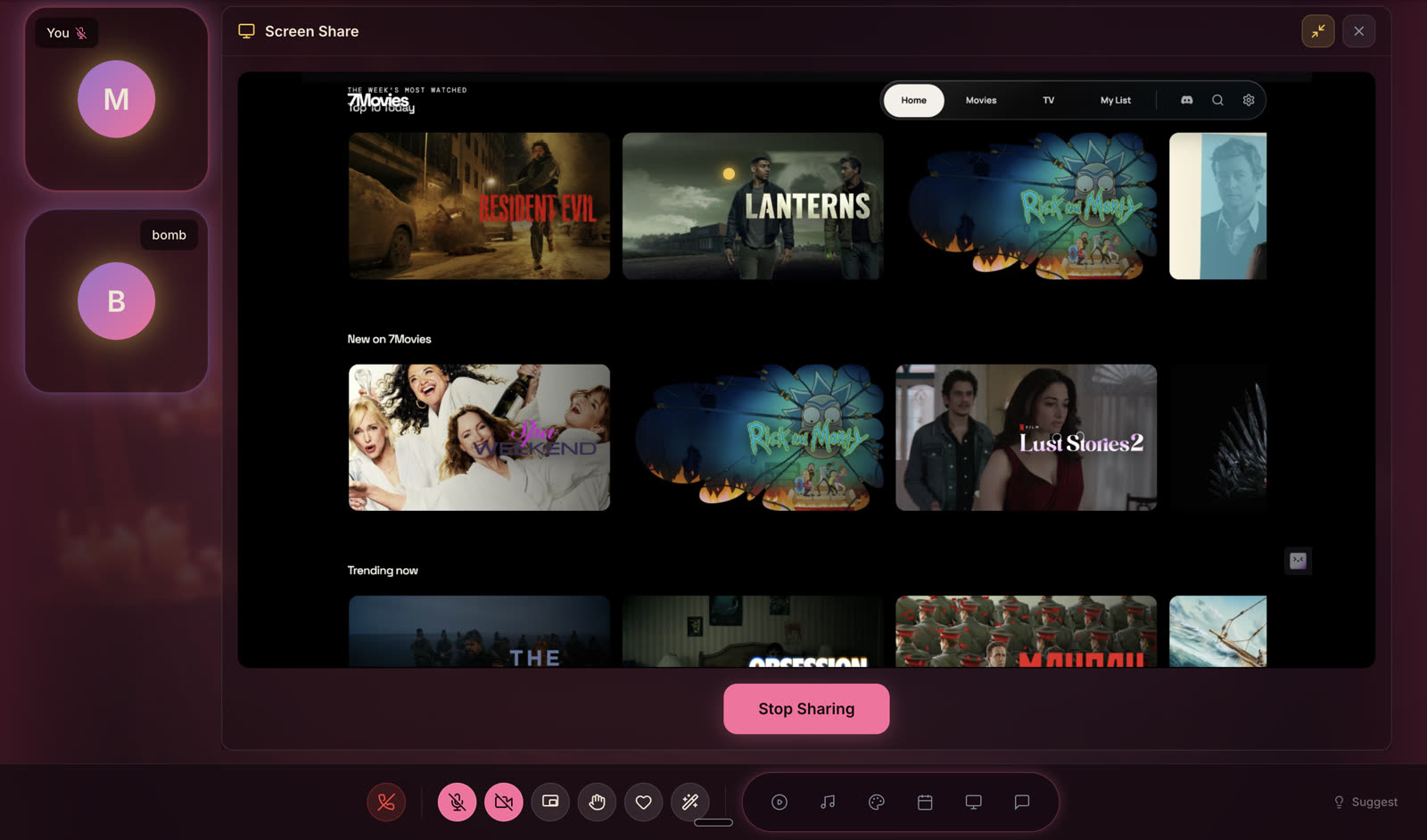
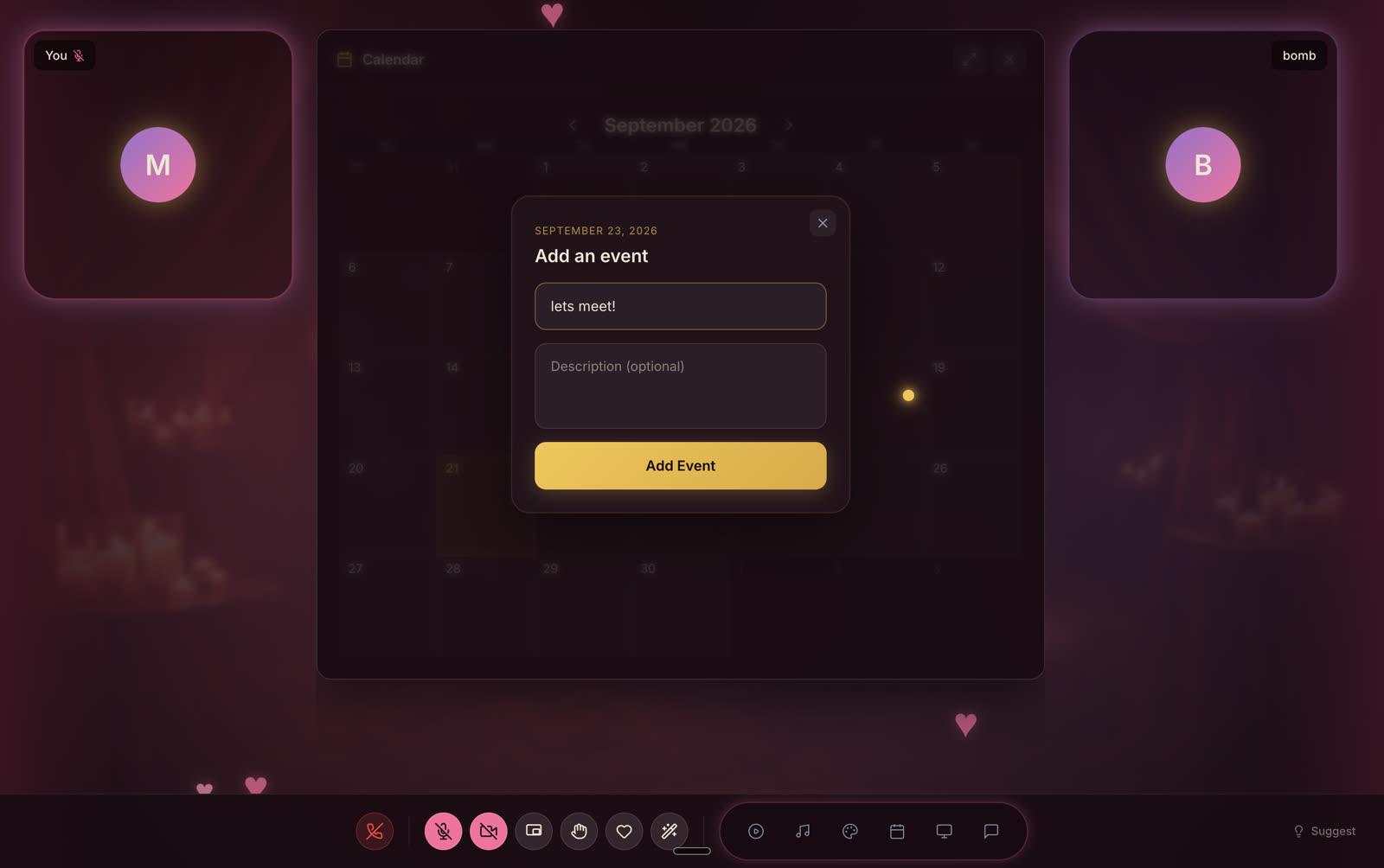
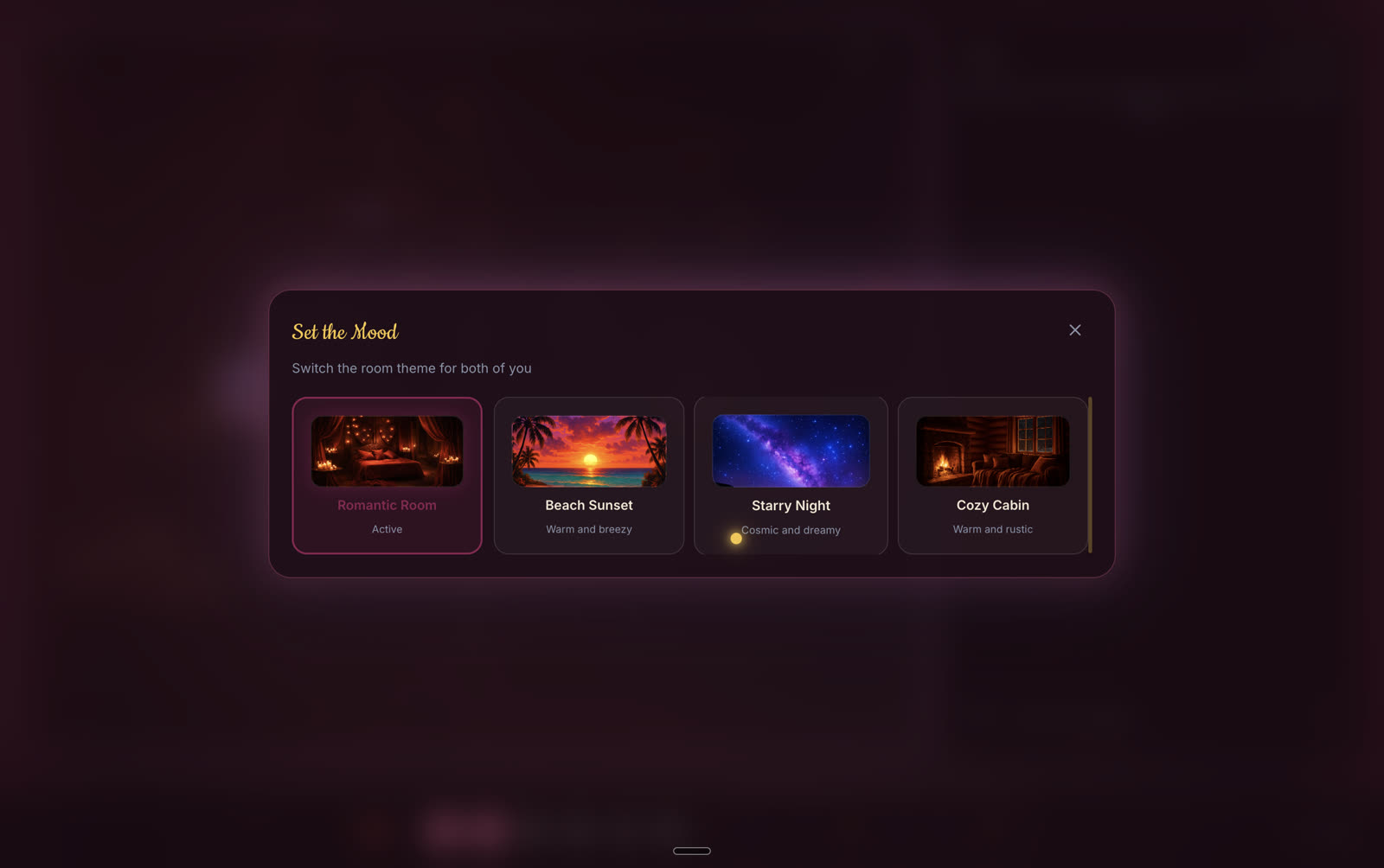
You can jam together: search a song or a mood, queue it, and both of you hear the same song at the same second. You can share a tab and watch a movie. You can put the next visit on a calendar you both see. You can change the room from a candle-lit bedroom to a beach at sunset, and it changes for both of you.
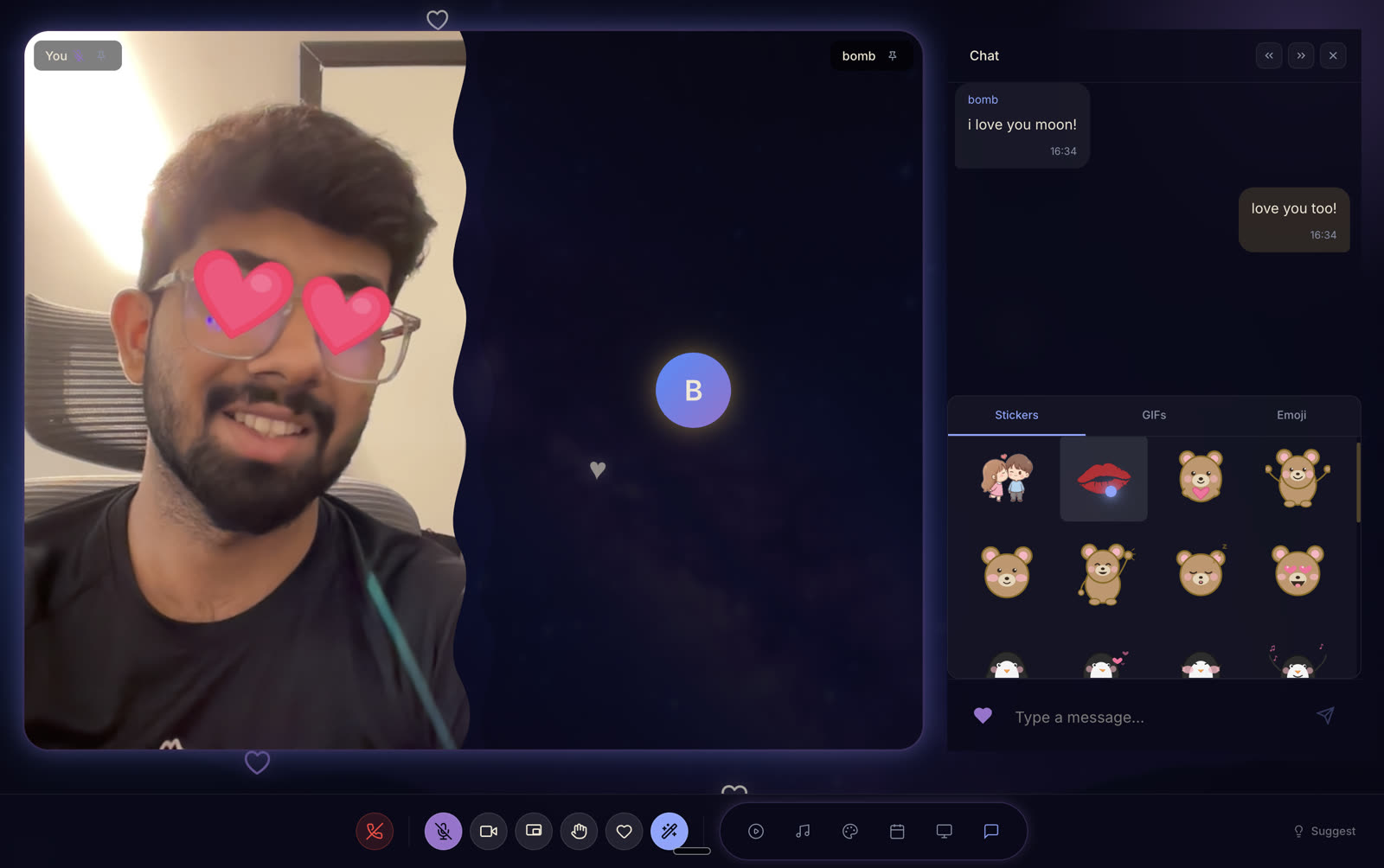
And there are face filters, because being silly together is most of what a relationship is.
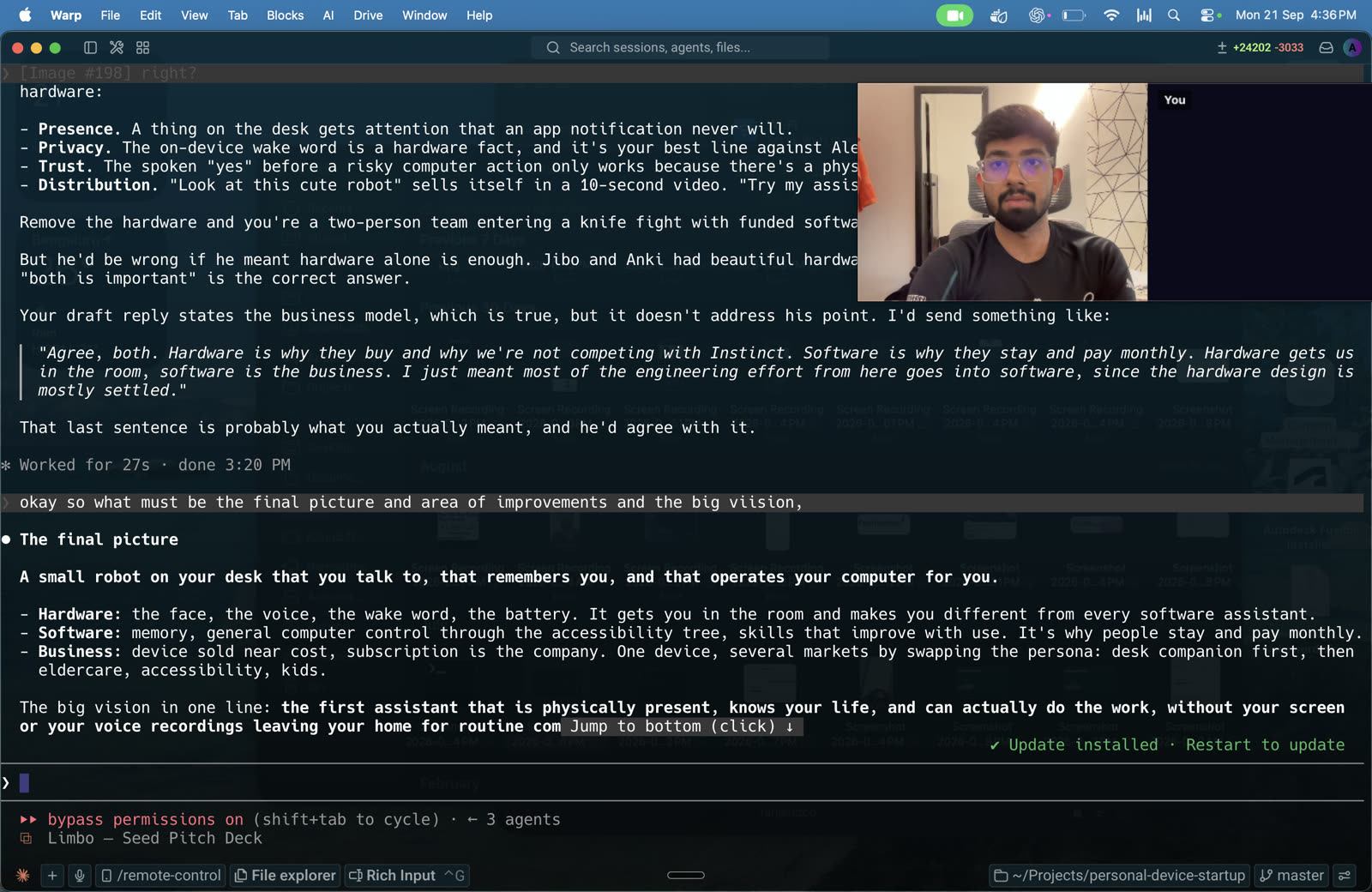
Not every evening is a date, though. Some nights one of you has work to finish. So the call can pop out into a picture-in-picture window that floats over everything else. You keep working, and your person stays in the corner of your screen. It turns out a lot of being together is just that.
The part I cared about most is the one you can't see in a screenshot.
This is about the most private kind of software there is. Two people, late at night, saying things meant for one other person. So I built it to keep nothing.
Calls are not recorded. There is no recording feature for me or anyone else to turn on. Chat messages are never written to a database. They live in the room and they are gone when you leave. The face filters run in your own browser, on your own camera feed. The database holds the room's name and settings, and your calendar events. For analytics I count events like "a room was opened" or "a game of chess started." Never names, never messages, never video.
I didn't do this to be noble. It is just simpler. Data you never store can't leak, and you never have to decide who gets to look at it.
Then other work took over. I joined an early startup as a founding engineer, and Moonbomb stopped getting my evenings. I never decided to stop. I just didn't get the chance to go back, and I never pushed it past that peak.
I used to think a product had to be big to matter. Fifty people is nothing on a dashboard. But these were fifty people who chose to spend two hours of their night inside something I made, with the person they love most. Nothing else I have built has been used that warmly.
It is still live. Make a room at moonbomb.me and send someone the link.